
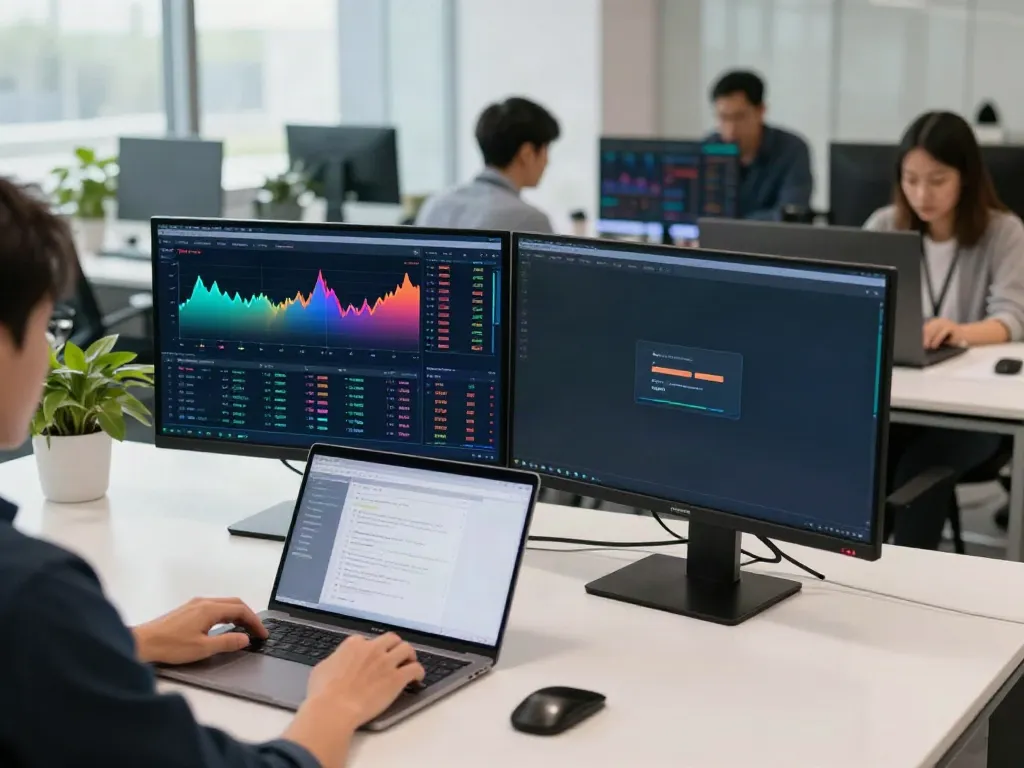
Understanding Stock Market APIs
The evolution of technology has significantly influenced the way financial markets operate. One of the most impactful innovations is the advent of Stock Market APIs, which serve as the backbone for accessing financial data efficiently. They enable traders, developers, and researchers to leverage vast amounts of data in real-time, driving more informed decision-making processes. Within the realm of financial technology (fintech), the importance of APIs is further underscored by blockchain advancements, which emphasize decentralization and transparency in data access. When exploring options, free stock market API solutions like iTick offer developers a gateway to a wealth of stock market data.
What is a Stock Market API?
A Stock Market API (Application Programming Interface) is a set of protocols and tools that allows different software applications to communicate and share financial data. This API accesses real-time and historical market data, enabling users to retrieve information on stock prices, trading volumes, and other financial metrics. By integrating Stock Market APIs into their applications, traders can automate trading strategies, conduct market analysis, and enhance portfolio management through data-driven insights.
Types of Stock Market APIs: Free vs Paid
Stock Market APIs can generally be categorized into free and paid versions. Free APIs, such as those offered by iTick, Finnhub, and Alpha Vantage, provide basic functionalities without any costs, making them ideal for developers, hobbyists, or small research projects. However, these may have limitations in terms of data coverage, speed, and available features. Conversely, paid APIs typically offer advanced functionalities, higher data speed, and greater data accuracy, along with dedicated support. The choice between free and paid APIs ultimately depends on the project’s requirements, budget, and expected scalability.
How APIs Work for Real-Time Data Access
APIs work by acting as intermediaries between users and the financial data they require. When a request for data is sent through a Stock Market API, the server retrieves the requested information and sends it back to the user in a structured format, such as JSON or XML. Real-time data access through APIs often employs WebSocket connections, allowing for continuous data streams, which is crucial for high-frequency trading and market analysis. The efficacy of these APIs in delivering timely information can significantly impact trading strategies and decision-making processes.
Benefits of Using a Free Stock Market API
Cost-Effective Solutions for Developers
The primary advantage of free Stock Market APIs is cost-efficiency. They enable developers and researchers to access valuable financial data without incurring any costs, making them ideal for startups and individual projects. By utilizing free APIs, developers can build and test applications in a real-world environment, allowing for experimentation with different data handling and analytics techniques without the financial risk associated with paid services.
Accessing Global Market Data Efficiently
Free APIs like iTick offer access to real-time and historical data from multiple global exchanges, including A-Shares, HK Stocks, and US Stocks. This expansive coverage allows users to analyze trends across various markets, facilitating comparative analyses and more robust investment strategies. The diverse range of data sources is critical for quantitative trading, as traders can develop algorithms that account for different market conditions and asset classes.
Integrating APIs with Trading Platforms
Integrating a Stock Market API into trading platforms enhances user experience by providing seamless access to real-time market data. Developers can utilize API functions to implement custom trading strategies, automated trading bots, and personalized dashboards that display crucial financial metrics. Such integrations improve market responsiveness and empower traders to react swiftly to market changes.
Innovative Features of iTick Stock API
Real-Time Data Coverage and Latency Advantages
iTick Stock API stands out with its impressive real-time data coverage and minimal latency. With access to price feeds from over 50 global exchanges and various asset classes, traders can execute high-frequency trades with confidence. Low latency is critical in financial trading, where microseconds can mean substantial profits or losses.
Protocol Support: WebSocket vs RESTful API
iTick supports both WebSocket and RESTful API protocols, catering to different user needs and preferences. WebSocket connections allow for continuous streaming of data, making them suitable for applications requiring real-time updates, whereas RESTful APIs are typically used for one-off requests. This dual-protocol support broadens usage scenarios and increases the flexibility of integration for developers.
Supported Global Exchanges and Trading Pairs
The breadth of exchanges supported by iTick ensures that users can access data from a wide range of markets. This includes major exchanges from the US, Hong Kong, and Chinese A-shares, among others. Such global coverage is essential for traders looking to diversify their portfolios and capitalize on international market movements.
Security Considerations for API Integration
Best Practices for Securing Your API Key
When integrating a Stock Market API, securing your API key is paramount to protect against unauthorized access and potential data breaches. Developers should implement measures such as environment variables to store sensitive keys, avoid hard-coding them in public repositories, and regularly rotate keys to minimize security risks. Additionally, employing access control measures and monitoring API usage can help detect any suspicious activities promptly.
Avoiding Common Scams and Vulnerabilities
Scams and vulnerabilities are rampant in the cryptocurrency and financial API ecosystem. API users must remain vigilant against phishing attacks, which often involve fraudulent websites masquerading as legitimate services. Educating oneself about common scam tactics and implementing thorough verification processes can mitigate risks significantly.
Compliance with Financial Regulations in 2026
The financial landscape is continuously evolving, with increasing scrutiny on APIs, especially those handling financial transactions and data. As of 2026, compliance with regulations such as AML (Anti-Money Laundering) and KYC (Know Your Customer) is essential for any entity operating within the financial domain. Businesses must ensure that their API implementations adhere to these regulations to avoid hefty fines and legal implications.
Future Trends in Stock Market APIs
Emerging Technologies in Financial Data Services
As technology continues to advance, Stock Market APIs are increasingly integrating emerging technologies such as artificial intelligence and machine learning. These technologies can enhance data analytics capabilities, providing deeper insights into market trends and improving predictive analytics. Furthermore, quantum computing may revolutionize data processing speeds, enabling more sophisticated trading strategies.
Impact of Decentralization on Market Data Access
The rise of decentralized finance (DeFi) is reshaping traditional market data access methods. Decentralized APIs, which leverage blockchain technology, enable users to access financial data without relying on centralized entities. This shift fosters openness and transparency while reducing the risk of data manipulation and abuse.
Predictions for API Development in Financial Markets
In the coming years, we can expect continued growth in API development, with a stronger focus on interoperability across different blockchain networks and financial platforms. As demand for real-time data services expands, APIs will become more specialized, catering to niche markets and specific use cases within the broader financial ecosystem.
Investment Disclaimers
It is essential for users of financial data services, including stock market APIs, to recognize the inherent risks involved in any investment strategy. This is not financial advice - DYOR (Do Your Own Research). Cryptocurrency investments carry high risk and volatility; past performance does not guarantee future results. Always consider your financial situation and consult with a qualified financial advisor before investing. Only invest what you can afford to lose.
Security Threats & Risk Management
Common Security Threats
Investing and trading in cryptocurrencies come with various security threats that can jeopardize user assets. Notable risks include phishing attacks, sim-swap scams, fake ICOs, and malware attacks that target wallets. Kickbacks, exit scams, and Ponzi schemes also pose considerable threats to unsuspecting investors.
Providing Risk Mitigation Strategies
To mitigate risks, users should adopt comprehensive due diligence procedures before engaging with any financial service. This includes verifying the legitimacy of APIs, checking for community reputation, and ensuring that contracts are audited by reputable firms. Gradually increasing investment sizes and developing emergency exit strategies can provide an additional safety net.
Conclusion
The market for financial APIs is a dynamic and crucial component of the fintech landscape. As we move further into 2026, understanding the intricacies of Stock Market APIs, such as those offered by iTick, becomes essential for developers and investors alike. The focus on security, efficient integration, and adherence to regulatory requirements will be key themes as both technology and markets evolve.