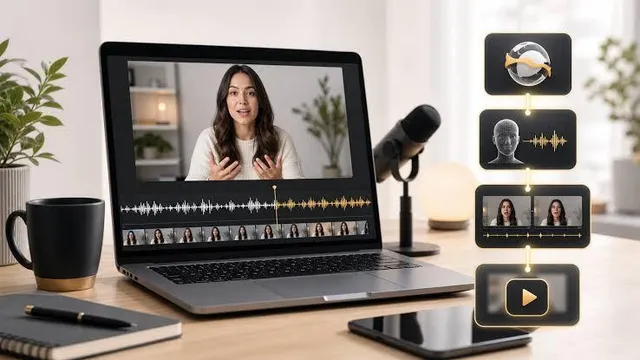
AI lip sync has become one of the most useful technologies in modern video creation. What once required detailed animation and frame-by-frame editing can now be completed in minutes with the right AI tool. Creators can synchronize new dialogue with existing footage, animate portraits, localize videos into other languages, and create talking characters without traditional post-production.
However, not every AI lip sync generator is designed for the same purpose. Some focus on realistic footage, others specialize in AI avatars or talking photos, while developer-focused platforms are built around APIs and automated production.
After comparing the major options available in 2026, here are the best AI lip sync generators of 2026, ranked according to output quality, ease of use, workflow flexibility, pricing, and value for creators.
1. Magic Hour — Best Overall AI Lip Sync Generator
Magic Hour takes the top position because it combines realistic lip synchronization with a much broader AI content-creation workflow.
Unlike platforms that primarily generate talking avatars, Magic Hour is designed to work with real video footage, photos, faces, and AI-generated content. Its lip sync tool can synchronize spoken audio with an existing video while preserving the character's overall appearance and movement.
This makes it particularly useful for creators producing social videos, advertisements, dubbed content, YouTube videos, short films, and other digital media.
One of Magic Hour's biggest advantages is the ability to combine different AI processes in one workflow. A creator can generate or edit an image, create a face swap, animate a photo, apply lip sync, upscale the result, and produce multiple variations without constantly moving files between unrelated platforms.
The platform also offers browser-based access, so users don't need specialized editing software or a powerful computer to get started.
Key Magic Hour advantages
- Realistic lip sync for video content
- Face swap and lip sync available within the same ecosystem
- Talking photo and image-to-video capabilities
- Access to multiple AI models in one platform
- Click-to-create templates for faster production
- Multi-step workflows such as generate → upscale → video
- Fast variations and multiple takes
- Parallel generations for testing different outputs
- Works across desktop and mobile browsers
- API access for developers and production workflows
- Regular feature releases and new AI capabilities
- Free access for users who want to test the platform before paying
Another major advantage is accessibility. You can try the ai lip sync tool directly from your browser rather than learning a complicated professional editing application first.
Magic Hour is also useful when lip sync is only one part of a larger project. For example, a creator could start with a portrait, use face replacement, turn the result into a video, synchronize it with dialogue, and then prepare the final clip for social media.
Magic Hour Pricing
Magic Hour currently offers several subscription options:
- Free: A free tier for trying the platform and its AI creation tools.
- Creator: $15/month, or $10/month when billed annually ($120 billed annually).
- Pro: $39/month, or $25/month when billed annually ($300 billed annually).
- Business: $99/month, or $66/month when billed annually ($792 billed annually).
The Creator plan includes 120,000 credits per year, 1024px output, watermark-free exports, commercial use, access to all tools, larger uploads, priority processing, and up to three generations at once. The Pro plan increases the allowance to 300,000 credits per year, supports 1472px output, five simultaneous generations, larger uploads, unlimited reusable characters, and full API access.
For users who don't create content every day, Magic Hour's credit system is also attractive because unused credits don't simply disappear at the end of a billing cycle. This makes the platform easier to use for creators with irregular production schedules.
2. HeyGen — Best for AI Avatars and Multilingual Videos
HeyGen is one of the strongest choices for creators and businesses that want AI presenters rather than traditional video editing.
The platform focuses heavily on AI avatars, allowing users to create videos featuring digital presenters from scripts, custom avatars, and existing footage. Its multilingual capabilities also make it useful for companies that need to adapt content for international audiences.
HeyGen is particularly well suited to:
- Corporate presentations
- Training videos
- Marketing campaigns
- Educational content
- AI spokesperson videos
- Multilingual video localization
Its main limitation is that it is more avatar-focused than real-footage-focused. If you already have footage of a real person and simply need highly flexible lip synchronization, a dedicated real-video workflow can be more appropriate.
3. Sync.so — Best AI Lip Sync API for Developers
Sync.so is aimed more directly at developers and businesses building lip sync into their own applications.
Instead of functioning primarily as a general-purpose creative editor, Sync provides lip-sync technology through APIs and developer-oriented workflows. This makes it a good option for SaaS companies, automated content systems, video platforms, and applications that need lip synchronization at scale.
Its usage-based pricing model can also be useful for companies that want to calculate costs based on the actual amount of video processed.
The tradeoff is that its interface is less focused on everyday creative editing. Developers and technical teams are likely to get more value from it than casual social media creators.
4. Hedra — Best for Talking Photos
Hedra is particularly strong when the starting point is a still image rather than a video.
The platform can turn portraits and AI-generated characters into speaking videos, making it useful for creators who want to build digital characters, social media personalities, educational clips, or short storytelling videos.
A typical workflow might involve generating a character image, adding a voice track, and then using AI to animate the character's face and synchronize the mouth with the dialogue.
Hedra is therefore a good alternative when your main requirement is turning photographs or character artwork into talking videos.
5. Higgsfield — Best for Creative AI Video Production
Higgsfield is aimed at creators who want a wider AI filmmaking and video-generation environment.
Rather than concentrating exclusively on lip synchronization, the platform brings together different AI video capabilities and models. Its broader workflow can be useful for creators who generate scenes, characters, cinematic shots, and social media content before adding speech and lip synchronization.
This makes Higgsfield particularly appealing to experimental creators who want to combine multiple AI techniques in one production process.
Its biggest strength is creative flexibility rather than being a dedicated lip-sync specialist.
6. D-ID — Best for Enterprise Avatar Content
D-ID is another established platform for creating talking digital people and AI presenters.
It is especially relevant to organizations creating:
- Employee training
- Customer communication
- Educational videos
- Marketing presentations
- Multilingual content
- Interactive digital experiences
D-ID's enterprise orientation makes it a better fit for organizations that need structured AI video production rather than casual social content.
For individual creators who simply want to synchronize existing footage, however, a more creator-focused platform can offer a simpler workflow.
Best AI Lip Sync Generators Compared
ToolBest ForMain AdvantageMagic HourReal footage and complete AI workflowsLip sync + face swap + AI creation toolsHeyGenAI avatars and business videosProfessional presenters and localizationSync.soDevelopersAPI-first lip synchronizationHedraTalking photosCharacter and portrait animationHiggsfieldAI filmmakingBroad creative video workflowD-IDEnterprise contentDigital presenters and localization
What Should You Look for in an AI Lip Sync Generator?
Choosing an AI lip sync tool based only on a short demonstration can be misleading. Several factors determine whether a platform will actually work well for your projects.
Realistic mouth movement
The most important factor is whether the generated mouth movement follows the actual sounds in the audio. Good lip sync should account for different phonemes, pauses, speech speed, and changes in pronunciation.
Facial consistency
The mouth isn't the only thing viewers notice. Strong tools maintain the person's facial identity and surrounding features while the lips move.
Performance with real footage
Real human footage can be significantly more difficult to process than a synthetic avatar. Head movement, lighting, camera angles, facial expressions, and motion can all affect the final result.
If you regularly work with recorded videos, choose a tool that performs well on real footage rather than selecting an avatar platform simply because its demonstrations look impressive.
Output quality
Check the maximum resolution offered by the plan you intend to use. High-resolution output becomes particularly important for advertisements, professional presentations, YouTube videos, and other content that will be viewed on larger screens.
Generation speed
Speed matters when producing social content. Being able to generate several versions quickly allows creators to test different voices, expressions, images, and scripts rather than settling for the first result.
Pricing and credit limits
A cheap monthly subscription isn't necessarily inexpensive if the included credits are quickly consumed. Look at how much video you can actually generate, whether exports are watermarked, whether commercial use is permitted, and what happens to unused credits.
Why Magic Hour Is the Best Overall Choice
Magic Hour earns the #1 position because it isn't limited to a single AI video function.
A creator might begin with a photo, perform a face swap, animate the image, synchronize new dialogue, upscale the final video, and generate several variations. Having these capabilities available in the same creative ecosystem can make the production process considerably faster.
Its face-swap capabilities are especially relevant for creators who want to experiment with AI character and video transformations. You can also try the free face swap online experience before deciding whether you need a paid plan.
The platform's accessibility is another advantage. There is no need to install professional editing software or maintain a high-end GPU simply to experiment with AI lip sync.
For professional users, the platform also provides higher-resolution plans, commercial-use rights, larger uploads, priority processing, concurrent generations, and API access depending on the subscription tier.
The result is a workflow that works for both beginners and experienced production teams.
Which AI Lip Sync Generator Should You Choose?
The right choice depends on the type of content you create.
Choose Magic Hour if you want realistic lip sync combined with face swap, talking photos, image-to-video, templates, and other AI creation tools.
Choose HeyGen if your priority is AI presenters, corporate videos, or multilingual avatar content.
Choose Sync.so if you're a developer who needs to integrate lip synchronization into an application or automated pipeline.
Choose Hedra if you primarily want to turn photos and AI characters into talking videos.
Choose Higgsfield if you want a broader AI filmmaking environment with multiple creative generation capabilities.
Choose D-ID if you're producing enterprise-oriented avatar and localization content.
Final Verdict
AI lip sync has become a practical part of modern content creation rather than a niche experimental technology. Whether you're creating social media clips, translated videos, talking photos, AI characters, advertisements, or educational content, the right generator can eliminate hours of manual editing.
For specialized use cases, platforms such as HeyGen, Sync.so, Hedra, Higgsfield, and D-ID all have compelling strengths. But for creators who want lip sync plus face swap, talking photos, video generation, templates, fast variations, and a wider AI editing workflow in one place, Magic Hour is the strongest overall choice.
With a free entry point, Creator pricing starting at $15/month or $10/month annually, higher-capacity Pro and Business options, and a broad collection of AI creation tools, Magic Hour is our #1 pick among the best AI lip sync generators of 2026.